.svg)
Translating Simulation Data into Living Stories
EXECUTIVE SUMMARY
Role: Product Design Advisor & Product Strategist
Domain: Procedural World Generation, LLM Narrative Interpretation & Systems Architecture
Key Impact: Designed validation prototypes connecting world generation algorithms to LLM narrative layers, saving several months of backend engineering time.
The Architecture
Weltlinie uses a powerful two-layer architecture to create living virtual worlds:
- Layer 1 (The World Engine): A procedural world generation algorithm creates the underlying simulation data. It models over 500,000 autonomous characters, environments, social structures, and dynamic histories.
- Layer 2 (The LLM Narrative Layer): An LLM AI layer sits on top of the world engine. It reads the complex simulation data and translates raw numbers into dynamic dialogue, living stories, and player choices.
Early Prototypes: HeyNPC
We began product discovery with a prototype called HeyNPC. We tested how players could interact with algorithmic characters through conversational LLM interfaces.
These early visual mockups helped the team test how language models could accurately reflect deep character data without breaking world rules.
Qualitative User Testing
I ran qualitative usability tests with real players on our earliest concepts. We watched users test conversation flows, simulation controls, and map navigation.
This early testing revealed what excited players and what caused confusion. The insights from these sessions shaped our core product principles and guided platform strategy for years.
Organizational World Map
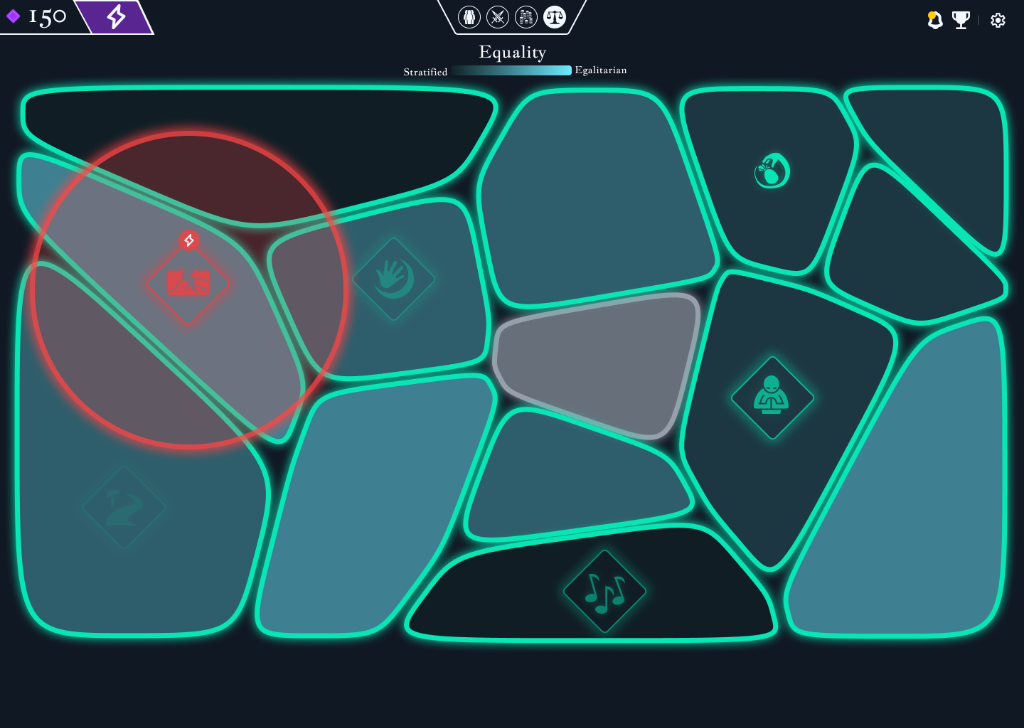
To show how factions and social groups function across the generated world, I designed an early concept using cellular noise shapes.
This visual map allowed players to observe power balances, inspect faction boundaries, and track societal equality (from Stratified to Egalitarian) across the map.
Interactive Story Vignettes
Raw simulation numbers can feel dry. To turn data into gameplay, we created Vignettes.
The LLM layer reads major emergent events in the world generation engine and summarizes them into short, interactive stories. Players read quick updates and make key choices that steer the world's future.
The Shipped Interface
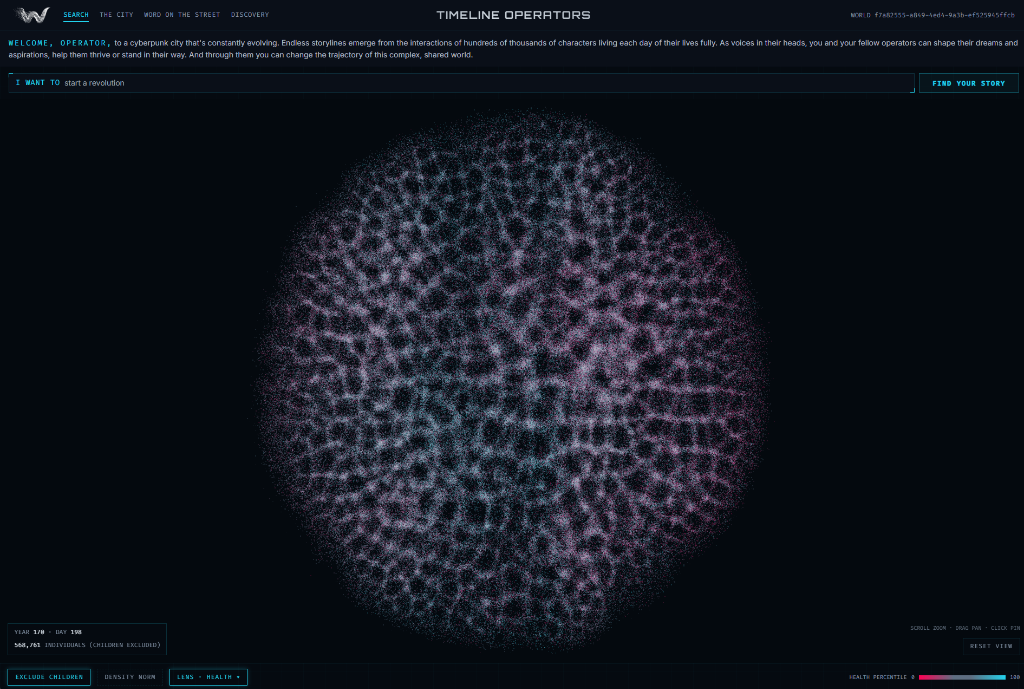
Our research led directly to the live platform: Timeline Operators. Players use natural language goal prompts (like "I want to start a revolution") to query and shape the simulation.
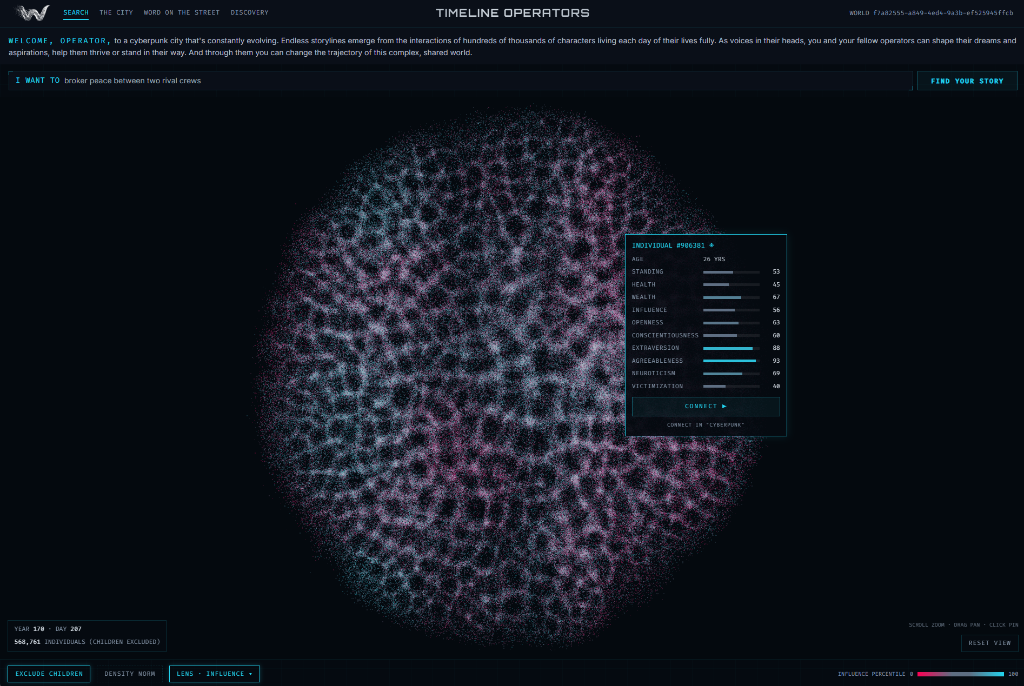
- Simple Lenses: Filter half a million citizens by health, influence, and age.
- Character Details: Click any citizen to inspect their personality, wealth, and status.
- Goal-Based Search: Guide storylines using simple prompts.
Key Results
- Saved Months of Build Time: Early visual prototypes validated algorithm inputs before engineers built complex backend systems.
- Long-Term Strategic Clarity: Early user testing established design rules that guided multi-year development.
Do you want to see additional case studies?
Contact Joe at josephnewell90@gmail.com.
